

Lufthansa Group is placing India at the centre of its future growth strategy, accelerating product upgrades, deploying the A380 on key routes and deepening connectivity through its European hubs.
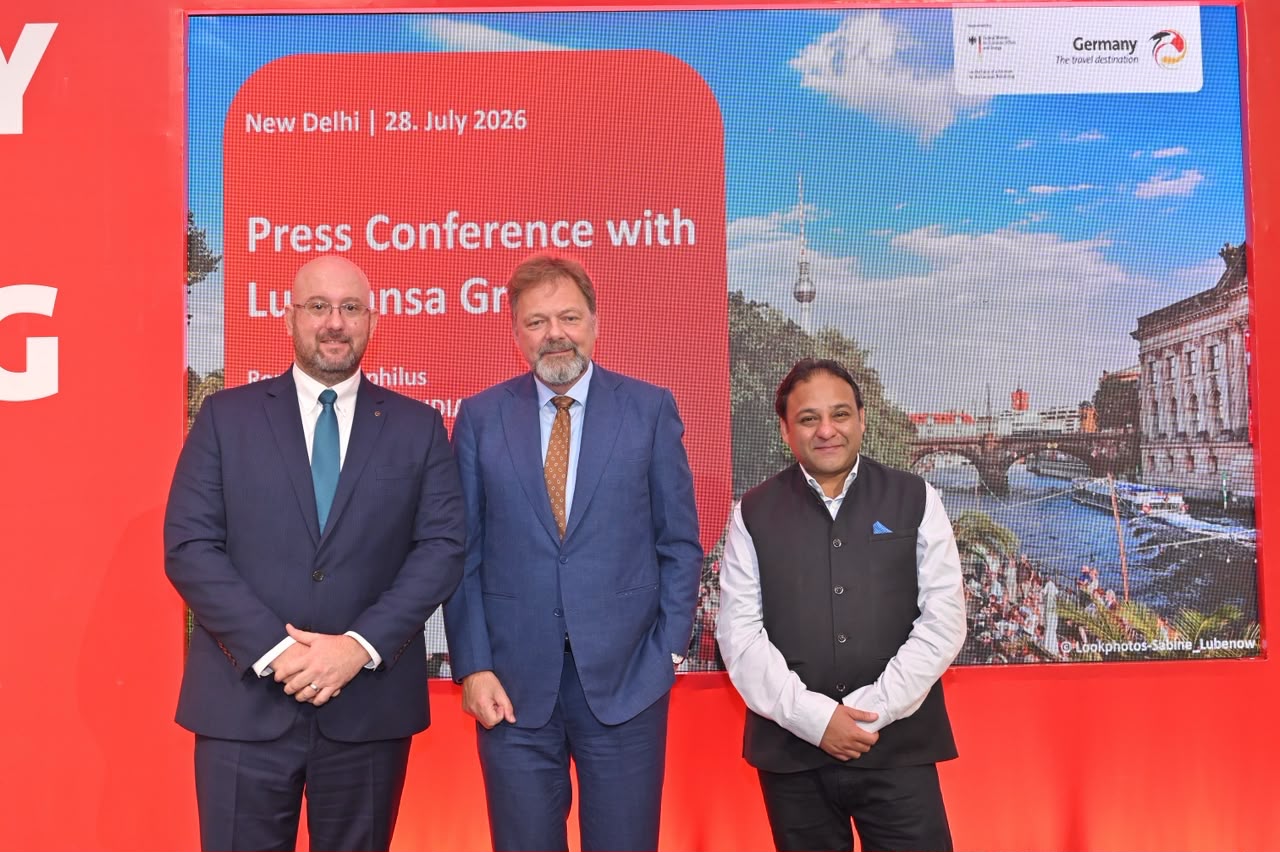
Speaking at an event organised by the German National Tourist Office (GNTO) India at the German Embassy in Delhi, Kevin Markette, senior director – South Asia, Lufthansa Group, underlined the strategic importance of India for the airline group, describing the country as its second-largest intercontinental market and a key focus market for future growth.
Markette said India was not merely another destination on Lufthansa Group’s global network but a strategic market, a positioning that was reflected in the group’s decision to make India one of the first intercontinental networks to receive its refreshed products and services.
Rather than focusing primarily on adding new routes from India, the group is prioritising the introduction of newer products, services and technologies across its existing India network, he said.
As part of this strategy, Lufthansa had been among the first carriers to introduce daily A380 operations on the Munich-Delhi route. The group is now set to deploy the A380 on its daily Mumbai operations from August 8, effectively doubling capacity compared with the A350-900 currently deployed on the route.
Markette said that India was one of the first markets where the airline has introduced the redesigned long-haul cabin concept, Allegris.
Lufthansa Group has earmarked €3 billion for product upgrades globally, with around €70 million invested in product and service enhancements during the previous year alone. The investments cover improvements that Indian travellers flying with the group can experience across various touchpoints of their journey.
The group expects to complete the product and service upgrade across its entire India network by the end of the first quarter of next year, with India expected to be among the first intercontinental markets where the upgrade programme will be completed.
Beyond point-to-point traffic, the group’s extensive European hub network is also positioning India as an important gateway for travellers heading to destinations across North America, Europe and Latin America.
Markette highlighted the transit visa facilities available to Indian travellers in Germany, which he said could enable passengers travelling to countries such as the US, Canada and several European and South American destinations—including Argentina, Brazil, Costa Rica and Mexico—to potentially save time and travel costs by connecting through Lufthansa’s European hubs.
Lufthansa Group currently operates 11 daily flights from Indian cities to its European hubs, providing Indian travellers with access to its wider international network.
The airline group is also looking to deepen its strategic relationship with Air India, following the signing of a memorandum of understanding with its fellow Star Alliance partner for a proposed Joint Business Agreement.
Markette said the ambition was to develop a joint business agreement covering the Europe market, with discussions between the two groups currently underway. He expects the agreement to be formalised within the next one to two years.
The airline group’s renewed focus on India comes as the German National Tourist Office looks to strengthen destination promotion in the Indian market, with evolving travel trends and newer themes forming part of its strategy to attract Indian visitors.