
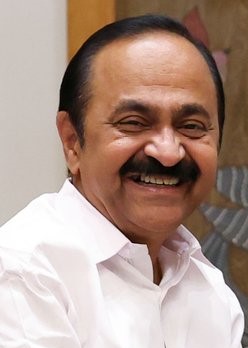
Kerala Chief Minister VD Satheesan has outlined an ambitious tourism-led development vision for the state, saying the government plans to use tourism as a major stimulant for economic growth. Unveiling a series of projects cutting across ports, aviation, culture, maritime heritage and entertainment at the inauguration of the 13th Kerala Travel Mart (KTM) in Kochi, Satheesan said Kerala has to substantially expand its tourism base in the coming years.
“We want to stimulate our economy through tourism,” the Chief Minister said, summing up the government’s vision towards the end of his inaugural address.
Satheesan said tourism is an important component of Kerala’s future and that the government has identified three major projects in which tourism is a common thread. The larger objective, he said, is to showcase Kerala’s diverse natural, cultural and maritime assets to the world and create more reasons for visitors to stay longer in the state.
A key component of the government’s vision is to leverage Kerala’s coastline and maritime infrastructure. With two major international ports, an international container terminal, 18 minor ports and around 600 km of coastline, the state plans to integrate its ports and effectively develop Kerala as a “port city”.
“We want to integrate all the ports and make entire Kerala into a port city,” Satheesan said, adding that the government also wants to shift a significant share of logistics from roads to the sea.
Cruise tourism forms an important part of this plan. The government has already given permission for a cruise terminal in Kochi and is looking at another terminal on the Kozhikode side. Satheesan said cruise services could connect Kochi with destinations including Dubai, Goa, the Maldives and Sri Lanka, besides creating a network connecting Kasaragod and Thiruvananthapuram.
In the second phase, the government plans to integrate the cruise programme with Kerala’s river network, opening up possibilities for river cruises across the state’s 44 river systems.
The second major project outlined by Satheesan is the development of Kerala as an aviation hub by integrating its four international airports, which he said are located in relatively close proximity to each other.
The government is also developing an international global convention centre near Cochin airport, which Satheesan described as a modern facility on a scale comparable to, and intended to surpass, the convention centre at Singapore’s Changi airport.
Kochi is also set to get an oceanarium, an international maritime museum and a film city. Satheesan said the oceanarium was a personal dream after seeing similar facilities in Sydney and Singapore.
The proposed maritime museum is intended to showcase Kerala’s long maritime history, which, Satheesan said, extends well beyond the arrival of Vasco da Gama at Kappad in 1498. Referring to archaeological excavations around the ancient port of Muziris, he highlighted the remains and coins that point to Kerala’s extensive trade links with different civilisations.
“We had a wonderful maritime history,” he said, referring to Kerala’s historical links with the Portuguese, Dutch, French, Jews and British.
The proposed film city is another element of the tourism infrastructure planned around Kochi. Satheesan said the objective is to ensure that visitors have enough attractions and experiences to stay in Kerala for at least seven days.
The government is also looking to develop culture as a tourism driver. A cultural park named after writer M T Vasudevan Nair is planned as a destination, while the state is also considering permanent venues for major cultural events, including the Kochi Biennale and the International Film Festival of Kerala.
In Thiruvananthapuram, the government plans to relocate the zoo from its existing city location to the outskirts, closer to a forest environment, and develop the existing urban space as a major public square along the lines of internationally known city squares.
Satheesan said the state has to offer visitors a wider range of experiences spanning its greenery, beaches, rivers, Western Ghats and cultural heritage.
The government has set an ambitious target for tourist arrivals. According to the figures cited by the Chief Minister, Kerala received around 820,000 foreign tourists in 2025, while domestic tourist visits crossed 25 million. The target is to increase foreign tourist arrivals to 5 million within the next three to five years, while taking domestic tourist visits to 100 million.
Minister for Tourism & Culture, PC Vishnunath, Excise Minister, M Liju, Tourism Secretary of Kerala, K Biju, among others, addressed the inaugural of the KTM 2026. The three-day B2B travel meet and exhibition will see over 250 international buyers and 850 domestic buyers meeting 400 Kerala buyers.