

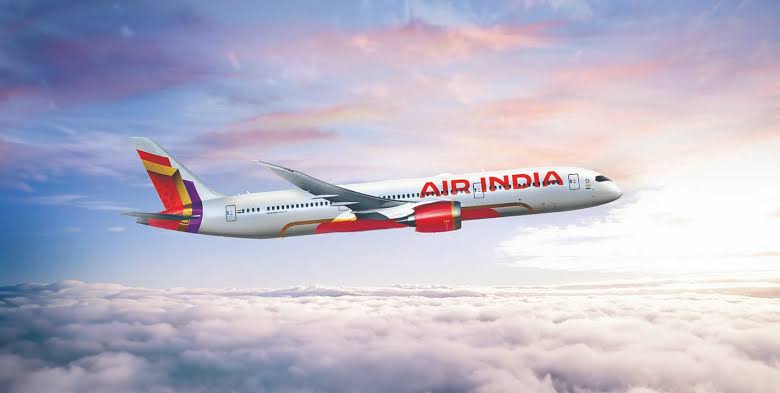
Air India is set to sign more than 10 new codeshare agreements with international carriers during the current fiscal year, significantly strengthening its global network across North America, Europe, and Africa, according to senior airline officials.
The move is part of the airline’s broader international growth strategy, which targets a 25% year-on-year increase in overseas business over the next three years. Officials confirmed that Air India has already recorded similar growth in the ongoing fiscal (FY25), underlining the momentum of its post-privatisation transformation.
When Tata Group acquired Air India in early 2022, the airline had no active codeshare partnerships. Since then, it has signed 19 codeshare agreements, outpacing competitors such as IndiGo, which currently holds about 10 such partnerships.
“Codeshare partnerships allow us to expand our footprint in markets where we do not operate directly, while also driving feeder traffic to our long-haul services,” a senior Air India executive said.
Air India currently has active codeshare agreements with major international airlines, including Lufthansa, Singapore Airlines, United Airlines, and Air Canada. These arrangements provide access to over 80 destinations globally. Additionally, the carrier holds interline agreements with 109 airlines, extending its reach to more than 800 cities worldwide.
According to an internal presentation cited by the Economic Times, these collaborations now serve over 25,000 travellers each week. The result has been a two-fold increase in passenger flow and a three-fold surge in booking revenue, underscoring the financial and operational benefits of codesharing.
Officials said the airline’s international strategy is focused on a dual approach: increasing penetration in underserved cities within key global markets and expanding to new territories via partner networks.
The airline is also placing increased emphasis on North American and European markets, where demand for India-bound travel remains strong. Africa has also emerged as a priority region, as Air India seeks to enhance connectivity to new and emerging travel corridors.
Meanwhile, domestic carriers handled 48.5% of all international air traffic to and from India in 2024, according to data from the Directorate General of Civil Aviation (DGCA). Of this share, the Tata Group’s aviation entities—Air India, Air India Express, and the now-merged Vistara—accounted for 26.1%.
Air India officials said the codeshare expansion aligns with the airline’s broader transformation under the Tata Group, which includes a fleet upgrade, service revamp, and a renewed focus on long-haul connectivity.
The new code-share agreements, expected to be finalised in phases through the year, are likely to enhance passenger convenience, improve aircraft utilisation, and help Air India compete more effectively with international full-service carriers.