
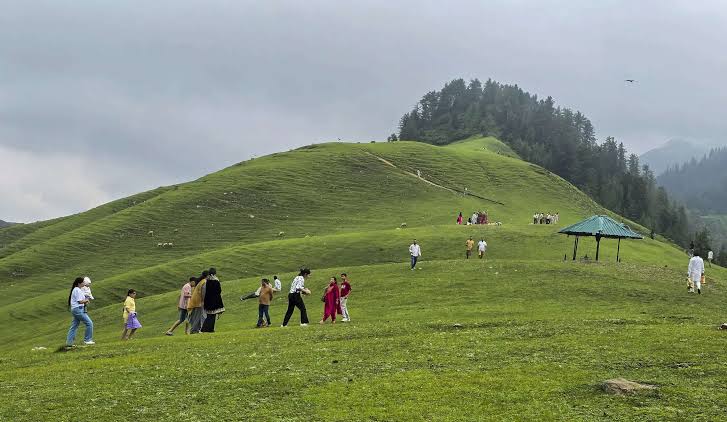
Union Tourism Minister Gajendra Singh Shekhawat highlighted that India’s current tourism boom is largely powered by domestic travellers, with temple tourism playing a significant role. He noted that new temple corridors have attracted more visitors, but the real driver is rising disposable incomes, especially among the lower-income groups. According to him, economic growth has enabled more Indians to travel within the country, creating a steady and resilient demand that cushions the sector from fluctuations in foreign tourist arrivals. This trend signals a strong internal market for tourism services, reducing dependency on international visitors.
Addressing concerns over slower foreign tourist arrivals, Shekhawat dismissed comparisons with destinations like Bali and Baku, explaining that these places started with lower visitor numbers, making their growth rates appear higher. He emphasised that while India’s inbound numbers may seem smaller, the length of stay is significantly longer. In fact, India ranks second only to the US in terms of average tourist stay duration, which boosts overall tourism revenue despite fewer arrivals. This, he said, is a more meaningful indicator of the sector’s performance.
Shekhawat acknowledged pressure on mid-range budget accommodations, which are in high demand due to domestic travel. Foreign tourists seeking affordable stays often face shortages because Indian travellers book them in advance. While luxury hotels continue to attract high-spending foreign visitors, the minister stressed the need to expand capacity in the budget segment to cater to both domestic and international guests. This segment’s growth is essential for balanced tourism development and for maintaining India’s appeal across all traveller categories.
In terms of broader impact, the tourism sector currently contributes over 13 per cent to India’s total employment, making it the second-largest employer after agriculture. Its contribution to the national economy stands at around 5 per cent. Shekhawat also revealed upcoming plans to boost sports infrastructure, which will drive additional tourism. Major events and improved facilities are expected to encourage both domestic and international travel, providing another growth avenue for the industry in the coming years.
Responding to issues that have tarnished India’s global tourism image, Shekhawat said pollution is largely a New Delhi-centric problem and does not affect popular destinations like Agra or Jaipur. On women’s safety, he argued that media overemphasis on isolated incidents creates a skewed perception. He contrasted this with incidents in countries like Italy or the US, where local issues are not magnified internationally. Shekhawat stressed the importance of balanced narratives to preserve India’s reputation as a safe and attractive travel destination.
Speaking specifically about Kashmir, Shekhawat shared that Pahalgam’s tourism has rebounded strongly just months after a terror attack. In July, all 18,000 rooms in the area were fully booked, driven mainly by Indian tourists. He expressed satisfaction with this trend, stating that the priority is sustaining domestic demand. Initiatives like offering incentives to travel bloggers and launching the ‘Paryatan Mitra’ programme aim to promote sustainable practices and strengthen tourism promotion. These efforts, combined with new projects like the ‘Yuge Yugeen Bharat’ National Museum, are designed to enhance both heritage appreciation and modern travel experiences in India.