

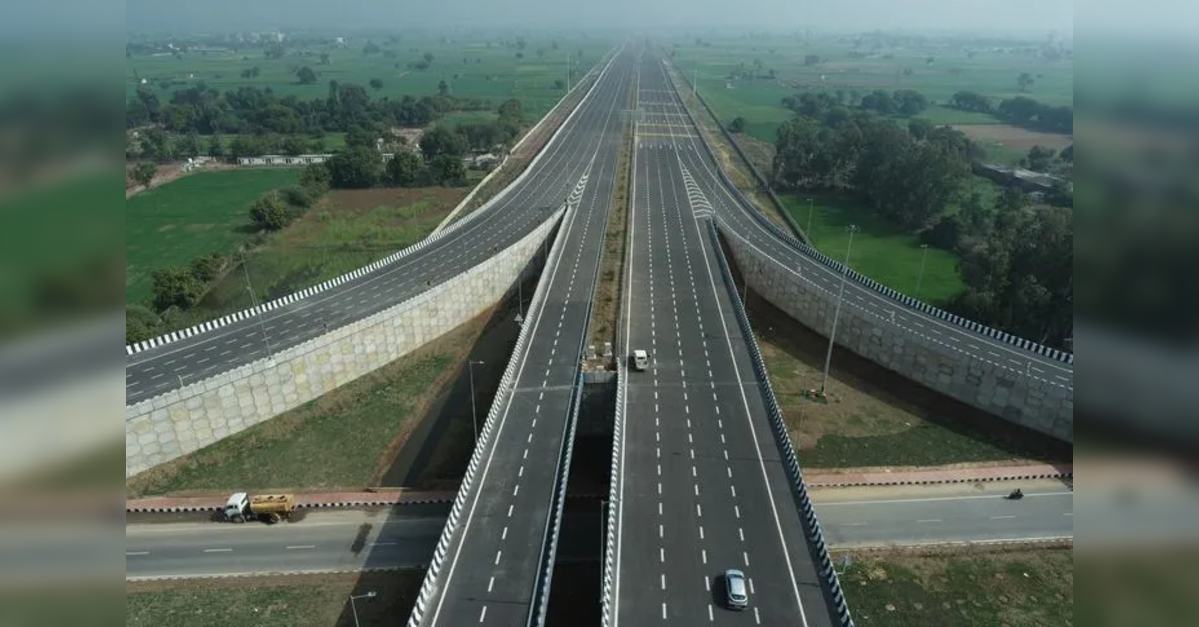
The Union Cabinet has approved the construction of a six-lane, access-controlled greenfield expressway connecting Nashik, Solapur, and Akkalkot in Maharashtra, marking a major boost to the state’s transport infrastructure. Announced by Union Railway Minister Ashwini Vaishnaw, the project is seen as a crucial segment of the Mumbai–Chennai economic corridor and part of India’s broader high-speed road network expansion.
The project has received clearance from the Cabinet Committee on Economic Affairs, chaired by Prime Minister Narendra Modi, at an estimated cost of INR 19,142 crore. Designed as a greenfield highway, the corridor will be developed under the Build-Operate-Transfer (BOT) model and is described as the largest-value BOT road project undertaken so far in the country.
The expressway will pass through key districts including Nashik, Ahilyanagar, Dharashiv, and Solapur, strengthening connectivity within Maharashtra while also linking western India with southern states. Once completed, it will form a vital stretch of the Surat–Chennai high-speed corridor, supporting smoother movement of passengers and freight across regions.
According to government estimates, the project will significantly reduce travel distance between Nashik and Solapur from 432 km to 374 km, a reduction of about 14 percent. Average travel speeds are expected to rise from 60 kmph to 100 kmph, cutting travel time and easing congestion on existing highways.
The corridor is also expected to bring major time savings for long-distance travellers. Travel time between Surat and Chennai is projected to fall by nearly 45 percent, from around 31 hours to about 17 hours, benefiting logistics operators, businesses, and long-haul commuters.
Beyond mobility benefits, the expressway is expected to spur economic growth by attracting private investment, improving regional trade, and supporting industrial development along its route. With a construction timeline of two years, the Nashik–Solapur–Akkalkot corridor is set to become a key infrastructure milestone in India’s journey toward faster, more efficient connectivity.