

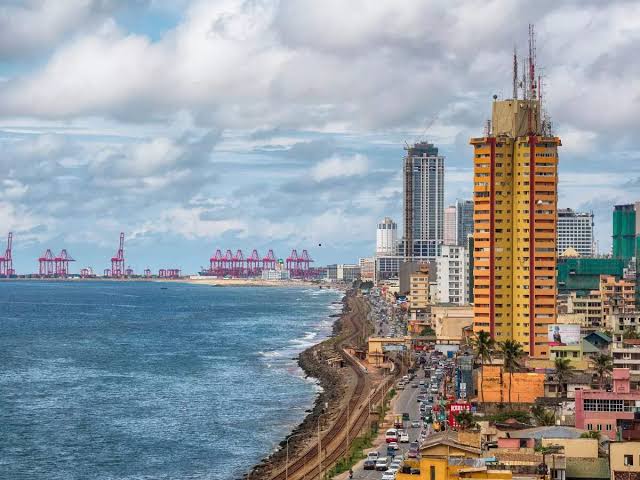
Sri Lanka has formally introduced its first digital nomad visa, marking a significant shift in the island nation’s immigration and tourism strategy as it looks to attract long-stay travellers and remote professionals amid a gradual tourism recovery.
The new visa allows remote workers, freelancers and overseas business owners to legally reside in Sri Lanka while working online for companies or clients based outside the country. Valid for 365 days, the digital nomad visa is renewable and is priced at USD 500 for the first year.
Applicants must be at least 18 years old, meet a government-specified minimum income threshold, and provide proof of a stable salary earned exclusively from overseas sources. Eligibility is limited to individuals whose employers or businesses are not registered in Sri Lanka, and visa holders are prohibited from taking up local employment.
However, approved nomads are permitted to rent accommodation, open local bank accounts, enrol children in private schools, access co-working spaces, and use other local services. Work activities must remain limited to representing overseas companies and promoting services internationally while residing in Sri Lanka.
The application process involves approval from the Ministry of Digital Economy, medical clearance upon arrival, and final processing by immigration authorities.
Alongside the digital nomad visa, Sri Lanka has also extended tourist visa validity from 90 days to 180 days, reducing the need for repeated extensions. Applications can be made via the Tourist Mobile App under the Online Electronic Tourist Visa Activation System.
Under the revised structure, extended tourist visas are priced at approximately USD 70 for SAARC nationals, USD 85 for non-SAARC travellers, and USD 50 for visitors from Singapore, Maldives and Seychelles under bilateral agreements. Tourists remain prohibited from taking local jobs, although limited remote work for overseas employers is allowed under specific conditions.
The government issued a detailed update on 4 February, signalling the transition from policy announcement to full implementation. Officials said the reforms are part of a broader effort to modernise immigration systems, align with global remote-work trends, and attract long-staying visitors who contribute economically without competing for domestic employment.
With this move, Sri Lanka joins a growing list of more than 50 countries worldwide offering digital nomad visas across Europe, the Americas, Asia and Africa. Many such programmes were launched between 2020 and 2025, following the COVID-19 pandemic, as destinations sought to attract high-spending, long-stay visitors.
Estonia pioneered the concept with its digital nomad visa in June 2020, followed by Barbados’ Welcome Stamp. Croatia, Dubai/UAE, Portugal and Spain introduced similar schemes between 2021 and 2023, while Japan and Thailand rolled out their digital nomad visas in 2024. Countries such as Italy have also introduced visas tailored to highly skilled, non-EU remote professionals.
For Sri Lanka, the expectation is that digital nomads and longer-stay tourists will increase local spending, support small businesses, and contribute to sustained tourism-led recovery, particularly as the country continues to rebuild following the economic crisis and inflationary pressures seen in 2024.