
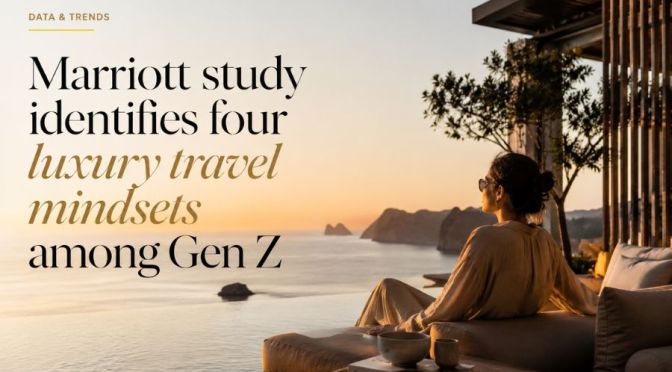
Affluent Gen Z travellers in Asia Pacific are reshaping the luxury travel landscape, according to new research by the Luxury Group by Marriott International. The study identifies four distinct travel mindsets, suggesting that personal values and travel intent are increasingly influencing luxury travel choices over demographic factors.
The report is based on responses from 2,800 affluent travellers across eight Asia Pacific markets, including 1,200 Gen Z respondents aged 18–29 from Australia, India, Indonesia, Japan, Singapore, South Korea, Thailand, and Vietnam. It found that younger luxury travellers are prioritising cultural immersion, wellness, nature, and personalised experiences while planning and funding many of their trips independently.
Oriol Montal, Regional Vice President of Luxury, Marriott International Asia Pacific excluding China, said, “Luxury today is no longer defined by a singular standard. It is deeply personal. Our research reveals that affluent Gen Z travellers are not just participating in luxury travel. They are reshaping it, driven by a desire for meaning, wellbeing, and authentic connection. As the definition of luxury continues to fragment and evolve, understanding these emerging perspectives will be critical for shaping the next generation of travel experiences.”
Four distinct traveller profiles
The report classifies Gen Z luxury travellers into four segments based on their travel motivations.
The Connoisseur Traditionalist, representing 34 per cent of respondents, values established luxury brands, personalised service, loyalty programmes, and carefully planned itineraries. Nearly four in five respondents in this segment consistently choose luxury hotels, while 91 per cent consider brand reputation when making bookings.
The Future Proofer, accounting for 30 per cent, views travel as an investment in long-term wellbeing. The report found that 97 per cent use wellness facilities during their stay, while 95 per cent consider proximity to nature an important factor when selecting a destination. More than half are willing to spend more on wellness experiences.
The Quiet Luxurist, comprising 20 per cent of respondents, associates luxury with privacy and disconnection. Every respondent in this category limits technology use while travelling, 85 per cent seek lesser-known destinations, and 90 per cent value private dining experiences.
The Cultural Reclaimer, representing 16 per cent, places emphasis on heritage and meaningful family connections. Every respondent in this segment actively plans family holidays, while half prioritise destinations linked to their family heritage. The report found that 88 per cent also seek immersive cultural experiences.
Longer stays and personalised experiences
Beyond Gen Z, the research indicates that affluent travellers across Asia Pacific are taking fewer but longer international leisure trips, with the average duration expected to increase from seven to nine nights.
The study also found that travellers increasingly expect personalised experiences, seamless service, and meaningful engagement. More than half of Gen Z respondents fund their own holidays, while nearly half plan their itineraries independently. Cultural experiences influence destination selection for 87 per cent of respondents, followed by culinary experiences (86 per cent), proximity to nature (86 per cent), and wellness (85 per cent).
The report also highlights the growing role of technology in travel planning, with 23 per cent of Gen Z respondents already using artificial intelligence tools for inspiration and itinerary planning.