

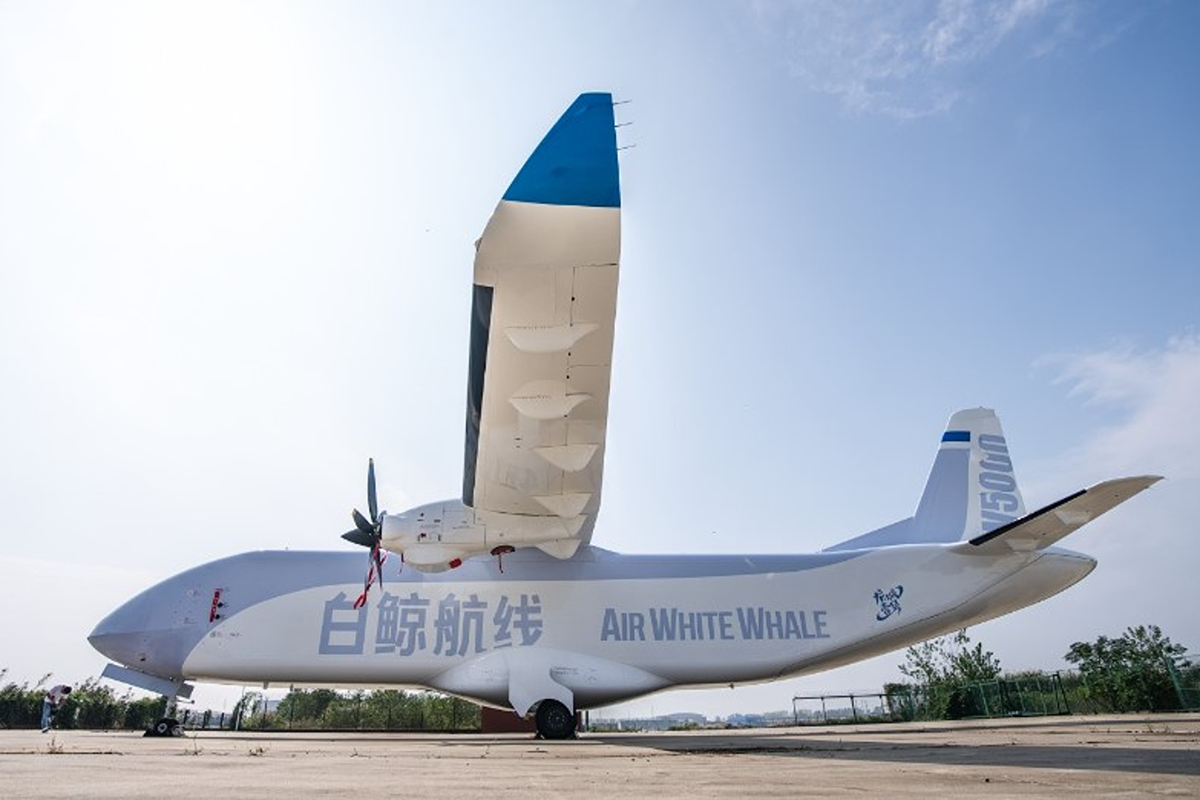
China has successfully tested a new hydrogen-powered aircraft engine, marking a major step toward cleaner aviation technology. The test flight took place in Zhuzhou, Hunan Province, where a 7.5-tonne unmanned cargo aircraft flew using the AEP100 hydrogen turboprop engine developed by the Aero Engine Corporation of China. The aircraft completed a 16-minute flight and safely landed after covering 36 kilometers.
Unlike electric aviation systems that rely on fuel cells, China’s new engine directly burns liquid hydrogen inside a turbine engine. This approach is similar to how traditional jet engines operate using aviation fuel. Experts believe direct combustion provides higher power and better scalability for larger aircraft, although storing hydrogen at extremely low temperatures remains a major technical challenge.
The hydrogen-powered engine is expected to support cargo aircraft, regional transport, and logistics operations in the early stages. Chinese authorities see the technology as useful for island transport and low-altitude freight services where fueling infrastructure can be more easily controlled and developed.
The development comes during a period of rising global fuel prices and geopolitical tensions affecting oil supply routes. China is positioning hydrogen aviation not only as an environmental solution but also as an energy security strategy to reduce dependence on imported fossil fuels and volatile oil markets.
China has also outlined a long-term roadmap for hydrogen aviation. The first phase focuses on technology validation by 2028, followed by regional aircraft applications by 2035. By 2050, the country aims for large-scale commercial use of hydrogen-powered aviation systems across the industry.
Globally, companies like Airbus are exploring hydrogen fuel-cell aircraft, while China appears to be focusing more on direct hydrogen combustion. Although passenger services are still years away, the successful test signals China’s growing ambition to lead the future of sustainable aviation technology.