

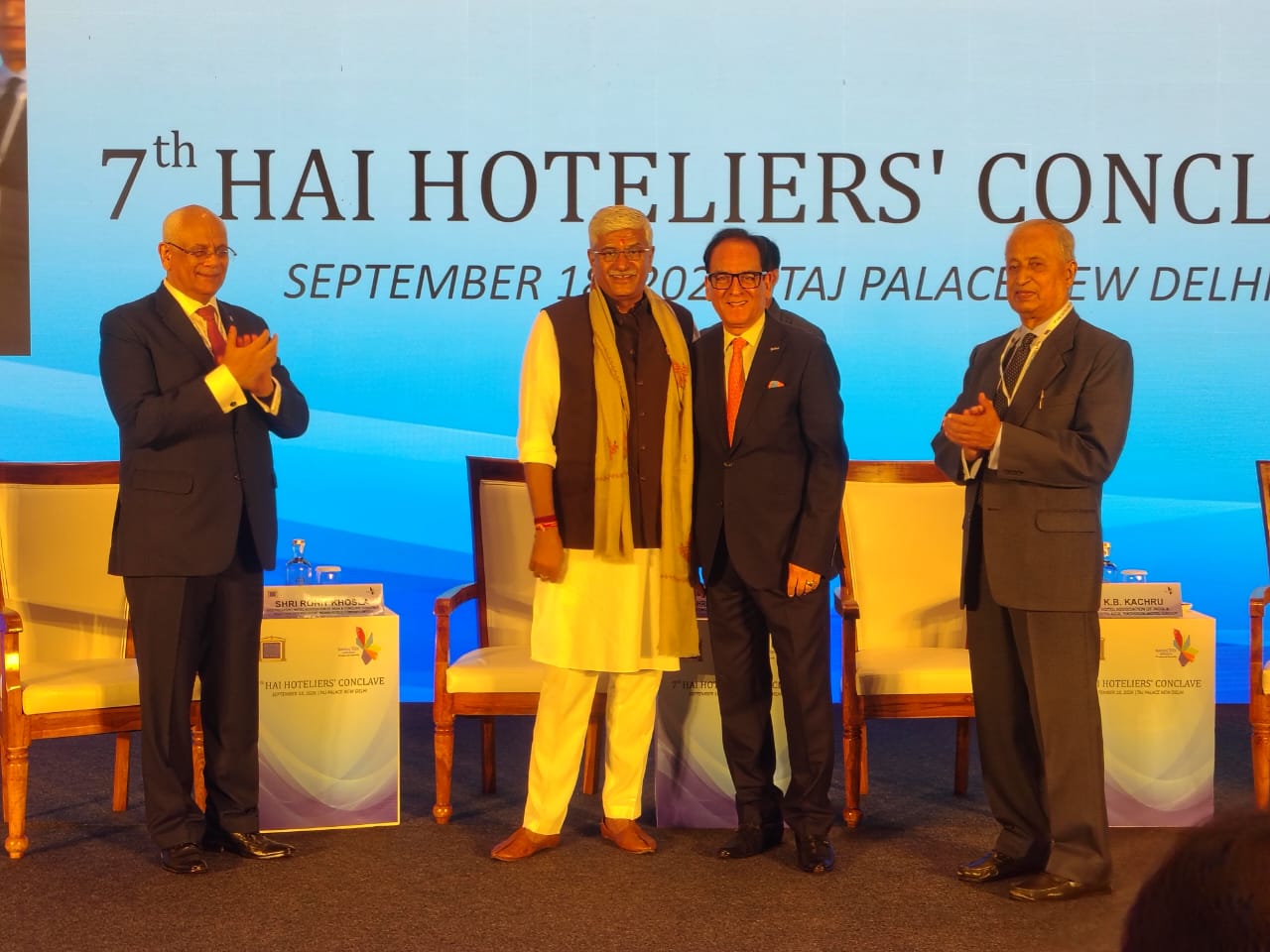
Realising the importance of connectivity for travel and tourism development, and the need to synchronise the two, the Union government is understood to have started exploring ways to bridge the current mismatch between connectivity-related developments and tourism infrastructure, and ensure that both move in tandem going forward. Union Tourism Minister Gajendra Singh Shekhawat gave ample indication of this new thinking in the government at the Hoteliers’ Conclave 2026 of the Hotel Association of India (HAI) in Delhi a couple of days ago.
Aligning the country’s expanding connectivity infrastructure with tourism and hotel investments can open up new economic opportunities, as a number of weekend destinations are bound to emerge in India over the next 10 years, the Union minister said in his inaugural address at the conclave.
This is also believed to have been a key discussion point at a high-level review meeting convened by Prime Minister Narendra Modi, which was attended by senior officials of the Tourism Ministry and NITI Aayog, the country’s policy think tank.
Later in the day, addressing the hoteliers, both Secretary-Tourism, Government of India, Bhuvnesh Kumar, and Suman Billa, DG Tourism and Additional Secretary of Tourism, gave clear indications of the government’s new approach to tourism development.
Billa spoke at length about leveraging the new momentum on the connectivity front for tourism. “One of the things that the Hon’ble Prime Minister is not tired of telling us, is that you must sit down with the industry and map where connectivity is going. If there is a new airport which is opening up, if there is a new highway which is opening up, that is something that you need to map. We have Vande Bharat trains today, there are almost 70 of them, and there are another 140 of them which are on the anvil, which connect 333 districts, which enable the traveller to travel to any destination by train in an efficient, secure, and a fast manner,” he said.
Connectivity is the biggest enabler for tourism and investments, he said. However, it is a double-edged sword unless compelling reasons are created in terms of capacity for both domestic and inbound tourism, he said, citing the new airports and the new orders for aircraft placed by Indian airline companies.
“It is an opportunity because it opens the doors to connecting us to several foreign countries which can bring tourists. It is also a threat because it also allows Indians to travel abroad with the same amount of ease as you would be able to bring people in. Unless you build capacity here, it is likely that this expanding aviation connectivity will work against us,” Billa said.
This realisation, together with the slipping foreign exchange advantage in tourism in the post-Covid period, is making the government think differently and proactively about boosting private investments in tourism and hospitality infrastructure, including critical hospitality supply. Although hotel supply in the organised segment has more than doubled in the last 10 years, from 80,000 classified rooms to 200,000 now, the feeling in the government is that it is still far short of demand.
According to government estimates, out of the 400 crore domestic travel trips, around 50 crore use hotels or guest houses for accommodation. Even by that conservative estimate, the current supply of classified and non-classified accommodation in the country is insufficient and must at least double quickly.
The top government officials, in their deliberations with the hotel industry, have conveyed this predicament and the need to work out synergies with the private sector to remove bottlenecks faced by investors. The Prime Minister has also flagged these issues prominently in his review meeting, according to the DG Tourism.
“One of the things that the Hon’ble PM has flagged to us is that he said that we need to enable investments in the tourism sector.”
He asked officials to sit across the table with the industry, understand the issues and find solutions.
According to Billa, the department will soon hold meetings with the Department of Economic Affairs, Ministry of Urban Affairs and RBI to find solutions to some of the challenges plaguing private investments in tourism, including high land costs, high cost of capital, the large number of licences and delays in approvals.
The hospitality industry also shares the sense of change in the government’s approach. Speaking to the media on the sidelines of the Hoteliers’ Conclave, KB Kachru, President of HAI, also reflected the mood in the industry.
“We had several meetings with the NITI Aayog in the last couple of months. The process has begun already. We are hoping for a positive outcome soon. Both the government and the industry have to re-energise through synchronised action-plan if we have to achieve the set goals of USD 3T tourism economy, contributing 100 million jobs by 2047,” he said.