

For a government that has been putting most of its focus on domestic tourism while international inbound tourism has remained relatively muted, the growing gap between inbound and outbound travel appears to be emerging as a concern. With outbound travel by Indian citizens growing faster than inbound tourism, India has turned net foreign-exchange negative on tourism, reversing the situation that prevailed before Covid.
At a time when the economy is facing one of its biggest tests of resilience amid geopolitical uncertainties and tariff pressures, the government is looking closely at different sectors and trying to plug potential leaks.
While domestic tourism in the country is galloping at a 10-year CAGR of about 11% and driving consumption of tourism products and services, the growing mismatch between inbound and outbound travel is emerging as a concern. Compared to the pre-Covid period, when India had a net foreign-exchange surplus from tourism, the situation has reversed in the post-Covid years.
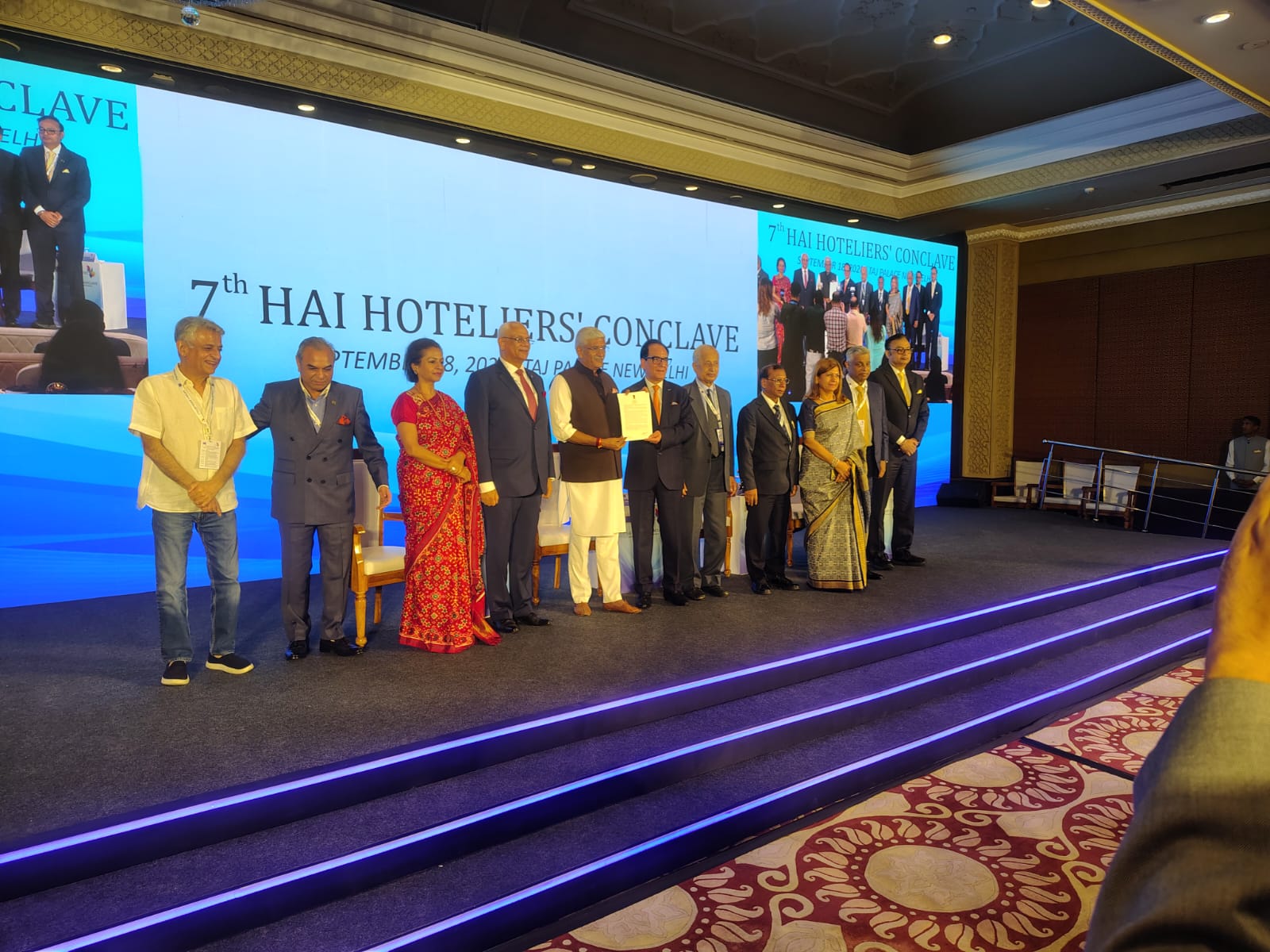
Director General and Additional Secretary, Tourism, Suman Billa, shared this concern openly with the tourism industry at the recently concluded Hoteliers’ Conclave 2026 of the Hotel Association of India (HAI).
“Today, we are losing more money by way of outbound. And, if you look at it from a compounded annual growth rate perspective, outbound is growing at 4.88%, while the inbound growth is only 3.93%. So when you take it at a CAGR rate, it essentially means that it gets compounded much more rapidly. So I think the challenge before us is very clear. It is that demand is outstripping supply by a big margin,” he said.
In 2025, India recorded around 2.02 crore international tourist arrivals and tourism foreign-exchange earnings of approximately USD 32 billion. During the same year, 3.28 crore Indian nationals travelled abroad. Billa has put the annual foreign-exchange outgo from outbound travel at around USD 37 billion.
“Essentially, today, the tourism sector has become a net foreign exchange loser for the country. This was not the case till before COVID,” he said, calling for a cogent plan to correct the imbalance. “We are more or less at an inflection point when we need to see as to how to make tourism work in the best interest of the country,” Billa added.
Participating in a fireside chat at the HAI conclave, Amitabh Kant, former CEO of NITI Aayog and India’s G20 Sherpa, also advocated “massive spending” on “branding, promoting and marketing” India in new digital ways before the country loses further ground in international tourism. While the strength of the domestic market is understood, an international traveller spends five times more compared to a domestic traveller, he said.
Against the backdrop of massive aircraft orders placed by Indian carriers, with new capacity expected to join the fleet over the coming decade, Kant said it was insane to think that such capacity could be sustained by taking Indians to places and bringing them back.
It is not just a matter of numbers, said Puneet Chhatwal, MD & CEO of IHCL. He said international tourists cannot be wished away for a country like India as they bring the much-needed foreign exchange. While domestic tourists fill up hotels, the way foreign tourists impact livelihoods at the destination level has no match.
“We are under-leveraged as far as inbound potential is concerned,” he said. When a city like Paris receives over 25 million visitors, sub-10 million for a country with incredible tourism assets is too low, he added.
In his presidential address at the Hoteliers’ Conclave 2026, KB Kachru, President of HAI, also questioned the rationale of ignoring international marketing and promotion of the Incredible India brand. “It’s like shooting at one’s own foot,” he said.
The concern emerging from the conclave is therefore not about the strength of India’s domestic tourism market, which continues to expand rapidly, but about whether that strength has been accompanied by sufficient attention to the international market. With outbound travel growing faster and more foreign exchange flowing out than coming in through international tourism, the imbalance is becoming harder to ignore.
In the current global context, with geopolitical uncertainties and economic volatilities creating additional headwinds, the question for policymakers is whether India can afford to allow this imbalance to persist indefinitely.