

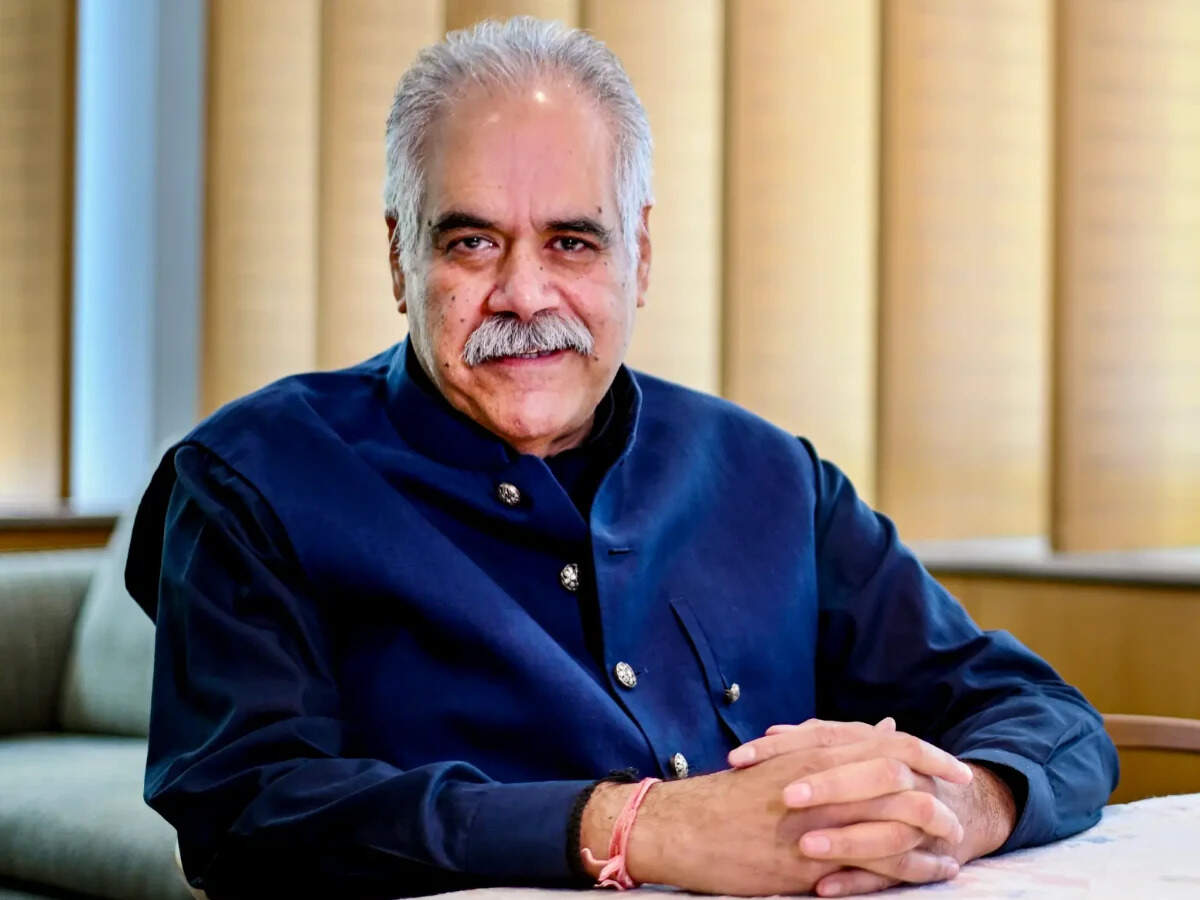
IndiGo Managing Director Rahul Bhatia has called on the government to cut aviation taxes, rationalise airport charges and review pilot duty time norms, arguing that such measures would lower airfares and unlock significant demand in one of the world’s fastest-growing aviation markets. In an interview with PTI, Bhatia said India continues to tax flying as though it were an elitist mode of transport, despite officially recognising it as a public utility.
Bhatia noted that airlines have largely absorbed rising cost pressures rather than passing them on to passengers. He pointed out that while inflation rose by 12 percent over three years, airfares collected by airlines increased by only 1 to 3 percent during the same period. In contrast, User Development Fee charges at airports rose by as much as 95 percent, while landing and parking charges increased by up to 34 percent, reflecting the extent to which airlines have tried to keep fares competitive despite mounting costs.
As IndiGo controls 66.3 percent of India’s domestic aviation market, Bhatia said the airline carries a responsibility to lead fare adjustments when rising costs make them unavoidable, while also being willing to reduce fares when conditions allow. He noted that jet fuel accounts for around 40 percent of airlines’ operating costs, with the sector further impacted by elevated oil prices and longer flight durations due to airspace restrictions linked to the West Asia conflict. According to Bhatia, IndiGo’s primary hedge against fuel volatility lies in operating increasingly fuel-efficient aircraft, adding that no Indian carrier currently hedges fuel prices directly.
Addressing concerns over IndiGo’s market dominance, Bhatia said nearly one-third of the airline’s capacity is deployed across roughly 250 unique city pairs where it has effectively created new markets. He argued that IndiGo’s share in genuinely competitive markets is only in the low-to-mid 40 percent range, and just 20 percent in international markets it serves, describing concerns about the airline’s size as somewhat overstated.
Bhatia also renewed calls for a review of India’s Flight Duty Time Limitations (FDTL), stating that the current norms reduce cockpit productivity, raise operating costs and undermine the competitiveness of Indian aviation globally. His comments mark one of the airline’s strongest public critiques of the revised FDTL rules, which came into effect in November 2025 and were linked to significant flight disruptions during last year’s peak travel season. The revised norms, introduced in phases by the DGCA to address pilot fatigue, increased mandatory weekly rest from 36 to 48 hours and placed tighter limits on night flying and duty periods.
Bhatia clarified that airlines are not seeking reduced safety standards but rather alignment with global best practices, stressing that aviation is a “fine margin” business where operational efficiency plays a critical role in cost management. IndiGo, which is set to mark 20 years of operations next month, faced regulatory scrutiny in December 2025 after operational disruptions forced the cancellation of over 2,500 flights within three days. The DGCA subsequently reduced the airline’s winter schedule by 10 percent and granted temporary relaxations in FDTL implementation until February 10, before the norms return to full effect.