

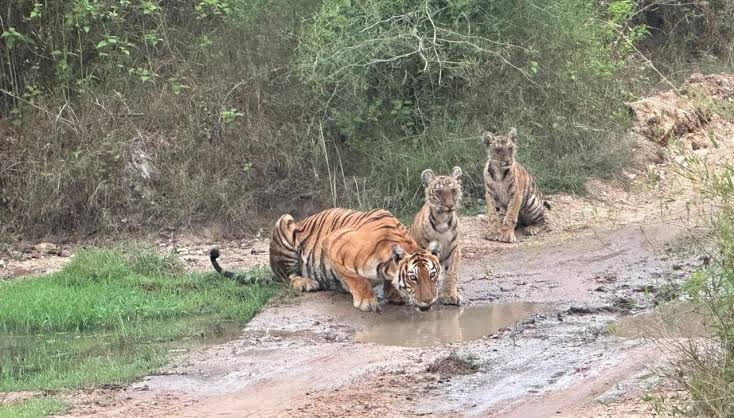
The Karnataka State Board of Wildlife (SBWL) has approved a more than 40 per cent increase in safari trips across Bandipur and Nagarahole tiger reserves, following the findings of a comprehensive study on ecotourism carrying capacity.
The decision was taken at a meeting of the SBWL standing committee chaired by Chief Minister D.K. Shivakumar, which reviewed and accepted the recommendations of a technical committee constituted to assess the impact of tourism activities in the protected areas.
Safari operations in the two reserves had been suspended in November 2025 after farmers raised concerns linking increased commercial tourism activity to a rise in human-tiger conflict incidents. In response, the state government set up a technical committee to examine the issue.
Prior to the suspension, the Forest Department operated a total of 97 safari trips daily across Bandipur, Nagarahole, Veeranahosahalli Gate and Nanachi. Safaris resumed on February 22 after a three-month halt, albeit with reduced trips, particularly in Nagarahole.
Based on the latest report, the committee has now recommended increasing the number of safari trips to a cumulative 137 vehicles per day across the four zones, significantly higher than pre-suspension levels.
The study found no direct correlation between safari activities and incidents of human-tiger conflict. The conclusions were drawn from an analysis of prey density and tiger populations within ecotourism zones compared to non-tourism areas within the reserves.
“The available scientific evidence demonstrates that ecotourism activities are not resulting in tiger displacement, reduced tiger occupancy, or increased movement of tigers into conflict-prone regions,” the report stated.
Further insights from scat analysis revealed that safari zones continue to sustain adequate wild prey populations, suggesting that tourism activity is unlikely to be a contributing factor to conflicts in fringe areas.
While endorsing increased safari capacity, the report emphasised the importance of strengthening community engagement. It recommended enhanced eco-development initiatives, outreach programmes, and nature education efforts to involve local stakeholders.
The committee also called for a more inclusive, bottom-up approach focusing on economic empowerment, skill development, sustainable livelihoods, and community wellbeing through eco-development committees and Panchayati Raj institutions.
Additionally, it stressed the need for regular dialogue with local communities, including farmers, public representatives, and the media, to build trust and ensure balanced conservation and tourism outcomes.
The decision marks a significant shift in Karnataka’s wildlife tourism policy, aiming to balance conservation priorities with sustainable tourism growth.