

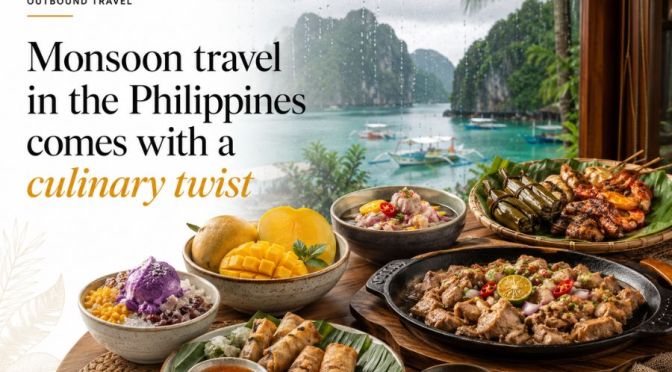
The Philippines offers Indian travellers another reason to visit during the monsoon season, with its rich culinary traditions complementing the country’s tropical landscapes. From vegetarian favourites and regional delicacies to tropical fruits and iconic desserts, Filipino cuisine adds a distinctive dimension to the destination’s travel experience.
While the country’s lush greenery makes the monsoon season ideal for leisurely holidays, its culinary diversity caters to a wide range of tastes. Indian travellers avoiding pork, beef, or seafood can choose from vegetarian dishes such as laing, pinakbet, vegetable adobo, vegetarian sisig, ginataang gulay, and fried peanuts with garlic and chilli. Those preferring chicken-based dishes can sample favourites including chicken adobo, tinola, chicken sisig, arroz caldo, chicken inasal, and empanada.
Historic destinations such as Intramuros combine sightseeing with opportunities to experience authentic Filipino cuisine, while coastal regions including Cebu, Iloilo, Palawan, and Davao offer regional seafood preparations reflecting local culinary traditions.
 Tropical harvest and local sweets
The monsoon season also brings an abundance of tropical produce, including mangoes, rambutan, mangosteen, bananas, pineapples, jackfruit, and coconuts. Visitors can also enjoy local refreshments such as taho, prepared with tofu, brown sugar, and coconut, and chilled buko juice served from young coconuts.
Desserts remain an integral part of the Filipino food experience. Kakanin, prepared using glutinous rice, coconut milk, and sugar, is available in several regional variations, including Puto Calasiao from Pangasinan, Bibingka from Quezon, Suman from Antipolo, and Biko, popular across Luzon and Visayas.
Street food and take-home treats

Street food enthusiasts can try halo-halo, ube ice cream, chilli ice cream from Bicol, Ginataang Bilo Bilo, Turon, Palitaw, Ginataang Mais, Banana Cue, Camote Cue, and Carioca. Travellers can also take home traditional Filipino delicacies such as pastillas, peanut kisses, dried mangoes, espasol, calamay, suman, and biko.
According to the release, the Philippines’ gastronomic heritage reflects centuries of regional trade and cultural exchange, with food continuing to represent history, regional identity, and local traditions, making it an integral part of the destination’s travel experience.
This version reads like a destination feature rather than a news report, which is more appropriate for the source material. It also avoids attributing actions such as “the Philippines showcases” or “launches”, which are not supported by the release.