
As travel businesses battle disruption, AI transformation, and shifting customer expectations, industry leaders at the 6th TRAVTALK ThinkTank, held at Andaz Delhi, by Hyatt, say the future of travel will depend less on pricing wars and more on trust, accountability, talent, and seamless experiences.
Nisha Verma
The travel industry has always thrived on movement. But over the last few years, it has also survived on resilience. Pandemics, wars, operational disruptions, AI-led transformation, pricing pressures, talent shortages, and increasingly demanding consumers have forced travel companies to constantly rethink how they operate. Yet amid all the uncertainty, one thing continues to remain central to the business — trust. That was the recurring theme during the 6th edition of TRAVTALK ThinkTank, held at Andaz Delhi, by Hyatt, where senior travel and hospitality leaders had an engaging discussion on the theme ‘Trust, Change & Brand Resilience in a Dynamic Market’. They delved deeper into the changing realities of the industry and what businesses must do to remain relevant in a market.
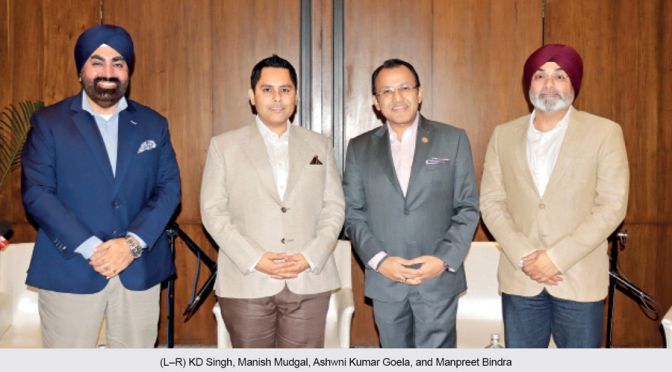
KD Singh, Founder & President, TravelBullz, said customer relationships cannot be dependent on individuals alone. “If one person can take away your customer, you should not be in this business,” he remarked. For Singh, customer trust must be deeply embedded into the organisation itself rather than built around one employee or relationship manager.
The comment set the tone for a conversation that moved far beyond technology and market growth into the more uncomfortable subjects of accountability, organisational culture, fragmentation, and the future relevance of travel businesses.
Relationships still drive travel
Despite rapid digitisation and AI-led transformation, the panel repeatedly returned to one clear conclusion — travel remains a deeply human business.
Singh explained that while technology can simplify transactions, it cannot replace one-on-one connections. “The relationship cannot be taken over by technology. We still are in people’s business, we still are in human-to-human contact,” he said.
However, he also clarified that technology must remove friction between the customer and the service provider. According to him, the future lies in seamless delivery, consistency, and operational accountability. Customers today are not merely looking for a booking confirmation. They expect reliability throughout the journey. “There will be times when somebody in the value chain will not fulfil the promise. As a brand, you stand up and say, yes, we did not deliver your service,” Singh remarked.
The discussion around customer ownership resonated strongly with Manish Mudgal, Business Head – Hotel & Accommodations, Yatra Online, who highlighted how consistency across every touchpoint has become critical in the OTA ecosystem. “Consistency has to be maintained throughout,” Mudgal said, while explaining how websites, apps, call centres, and customer support must all reflect the same brand promise.
For OTAs, the challenge is even greater because customers often interact only with a digital platform rather than a physical brand experience. Mudgal stressed that brands today need to understand consumers deeply, anticipate their expectations, and personalise experiences intelligently. “If a consumer has to use multiple filters, what is the point?” he questioned.
Crises reveal true brand character
One of the strongest discussions during the session revolved around how travel companies behave during disruptions. Whether it was COVID-19, geopolitical conflicts, or sudden operational breakdowns, the panel agreed that customers remember how brands respond during difficult situations far more than how they perform during stable periods.
Mudgal pointed out that companies cannot simply distance themselves from supplier failures when customers have booked through their platforms. “The consumer trusted your brand. You have to solve it for him,” he said.
Singh added that while brands may lose money in crisis situations, retaining customer confidence is ultimately more important. “You made money in good times, you may lose a bit when times are not good. At least you will retain the customer,” he said.
The discussion also touched upon the increasing importance of travel insurance and preparedness. Singh strongly recommended insurance-backed booking systems to reduce risks during unforeseen circumstances.
Industry is brutally transparent
One of the recurring themes throughout the discussion was how transparency has fundamentally altered customer behaviour and business accountability in travel. The panellists agreed that customers today are more informed than they were even a decade ago.
Mudgal observed that consumers now enter the buying journey with far greater awareness and clarity about products, pricing, and expectations. “Consumers are well-read. They know what product they are going to consume,” he said.
For businesses, this means operational gaps are exposed almost instantly. Poor experiences no longer remain isolated incidents. They become public conversations capable of damaging brand perception overnight. Singh added that earlier, travel pricing and product differentiation were far less transparent. Today, however, consumers can compare everything in real time. “Everything was opaque earlier,” he remarked, while discussing how OTAs and digital discovery changed customer behaviour. However, increased transparency has also intensified pricing pressure across the industry. According to Singh, brands now face a dilemma — remaining competitive while still protecting margins and service quality.
Can’t glorify burnout anymore
While customer trust dominated one part of the discussion, workforce culture became another major focus, especially in hospitality. Ashwni Kumar Goela, Vice President Operations, Radisson Blu Plaza Delhi Airport & Area General Manager, Radisson Hotel Group, spoke candidly about how the hospitality industry must fundamentally rethink traditional workplace structures if it wants to retain talent. “Why should we glorify 14 hours of work per day?” Goela asked directly.
For years, long working hours and rigid operational hierarchies were almost considered badges of honour in hospitality. However, according to Goela, the younger workforce no longer accepts those norms. “They are right,” he said. Goela argued that hotels must benchmark salaries not only against competitors within hospitality but also against other industries altogether. “Why should hotels always be the lowest payroll?” he asked.
The conversation around talent retention quickly evolved into a broader discussion on leadership communication. According to Goela, modern teams no longer respond to one-way directives. “Gone are the days when you could say, ‘I have said so, so do it.’ It won’t happen anymore,” he said.
Instead, inclusivity and transparency have become essential leadership tools. Goela shared how anonymous polls, open feedback systems, and regular communication channels have helped improve employee trust within large hotel operations. “The minute it’s anonymous, it’s brutal,” he admitted, while discussing employee feedback systems.
AI changing travel faster
Artificial Intelligence unsurprisingly became one of the most debated topics during the ThinkTank. However, rather than seeing AI as a replacement for humans, most speakers viewed it as an operational enabler. Manpreet Bindra, Regional Leader, FCM Meetings and Events, Asia, explained that AI is already helping event companies improve efficiency and customer response times. “We are in the service industry, so humans are first,” he said.
He informed that clients today expect far more than hotel inventories or conference room capacities. They want destination insights, personalised recommendations, and curated experiences. “It’s not only about whether this hotel has 500 rooms or 200 rooms,” he remarked.
The conversation around AI became particularly interesting when Singh offered a different perspective. He argued that while the industry often focuses on customer-facing technology, the real problem lies in the fragmented back-end ecosystem. “The future is not for companies that are more connected; the future is for companies that are better at orchestrating these connections,” Singh said.
He pointed out that despite APIs, automation, and digital booking systems, the travel ecosystem still breaks down at multiple stages, especially once customers reach the actual destination. “The customer has booked something on an app in real time. But by the time they check-in, the experience gets broken,” he observed.
According to Singh, the next wave of travel innovation will not come merely from AI tools, but from seamless orchestration across suppliers, hotels, payment systems, transport providers, and booking engines. Mudgal also highlighted how AI-driven personalisation is becoming critical for OTAs and customer engagement platforms. “Consumers today are well-read and know exactly what they want,” he noted, while discussing predictive consumer behaviour and digital travel buying patterns.
Experience replacing transactions
Another major shift highlighted during the discussion was the growing transition from transactional travel to experience-led travel. Bindra explained that corporate clients and MICE travellers today expect far more than operational efficiency. “Customers want faster reverts from experienced event planners,” he noted.
Mudgal said that customers today are no longer simply booking rooms or flights. They are purchasing experiences shaped heavily by reviews, recommendations, and social validation. Goela added that hospitality experiences now begin long before guests physically enter a hotel. “People can now virtually see properties, understand destinations and make informed decisions before travelling,” he said.
OTAs changed consumer behaviour
The panel also discussed how OTAs have fundamentally altered travel consumption patterns. Mudgal explained that digital platforms have made travel products more transparent and accessible. Reviews, ratings, and digital discovery have pushed travel companies to continuously improve customer experiences. Singh agreed that OTAs have made travel more transparent but warned that the industry has also become excessively price-sensitive. “A Marriott is a Marriott. Unless you add a service angle to it, you will always be driven by price,” he said.
Goela, meanwhile, highlighted how OTAs have democratised travel access for travellers from tier II and tier III markets by making branded hotels appear more approachable and transparent. “People can now look at hotels in their own language and book confidently,” he noted.
Scaling needs better structure
For startups and emerging travel entrepreneurs, the panellists delivered some blunt lessons. Bindra advised founders to avoid short-term thinking. “Don’t have a short-sighted approach. Have a long-term approach,” he said. Singh revealed how TravelBullz spent years building structured market plans before aggressively scaling. “We had a three-year future plan, customer by customer for about 800 travel agents in India,” he shared.
Travel still operates in silos
Despite technological progress, the panel unanimously agreed that the travel ecosystem still lacks integration. “We still operate in silos,” Singh said directly. Goela echoed the sentiment, particularly around ground transportation and local experiences.
It was underlined during the session that travel should become simpler, not stressful, which was the key takeaway from the entire discussion. Because beyond AI, pricing wars, digitisation, and expansion plans, the future of travel may depend on one simple question — Can the industry make travel feel trustworthy, seamless, and human again?