

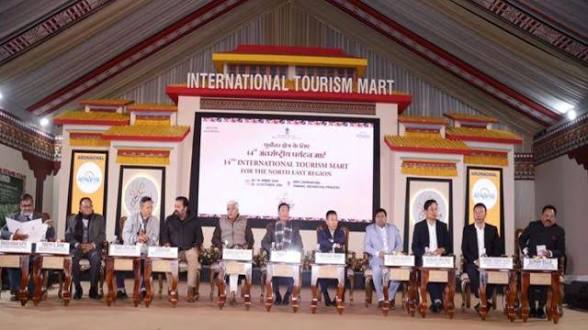
The 14th International Tourism Mart, which concluded in Tawang, Arunachal Pradesh, on Friday, placed significant emphasis on simplifying entry procedures for foreign visitors to boost international tourism across the Northeast. A specialised technical session led by the Ministry of Home Affairs (MHA) brought together representatives from all eight northeastern states to discuss ways to facilitate access to protected and restricted areas while maintaining security requirements.
Officials from the Ministry of Tourism said several reforms were being implemented to simplify permit applications for foreign nationals. Visitors can now apply for permits online through Indian diplomatic missions before arriving in the country or through Foreigners Regional Registration Offices (FRROs). Applications can also be submitted offline within the host states or Union Territories, providing travellers with multiple application channels.
The discussions also addressed concerns raised by tour operators about the region’s untapped potential for Buddhist tourism, particularly in Arunachal Pradesh, the birthplace of the sixth Dalai Lama. Union Tourism and Culture Minister Gajendra Singh Shekhawat called for a calibrated approach, emphasising that tourism promotion must go hand in hand with national security considerations and the region’s strategic requirements.
According to officials from the Mizoram Tourism Department, foreign travel permits are generally issued for 60 days for tourism purposes, while non-tourism permits are valid for 180 days and may be extended up to a year in select cases. Under the latest reform, permits are no longer restricted to specific circuits or tourist spots, allowing visitors greater freedom of movement within approved zones.
However, authorities will continue to verify the purpose of travel, with hotels and travel agents required to comply with regulatory procedures, including submitting Form-III reports to registration officers. The permits do not provide access to defence, paramilitary or other sensitive installations, for which separate clearances remain mandatory. Officials stressed that easing access would not dilute existing security protocols.
Despite rising tourist arrivals across the Northeast, international visitors continue to account for a small proportion of regional tourism. Official data cited at the event showed that of the 1.5 crore tourists recorded across the eight northeastern states, only 1.5 lakh were foreign nationals, representing approximately one per cent of total arrivals. With connectivity and tourism infrastructure improving, the states are seeking to make the region more accessible to international travellers while balancing tourism development with security and regulatory requirements.