
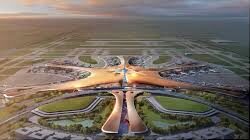
The much-awaited Phase 1 of the Navi Mumbai International Airport (NMIA) is likely to be inaugurated on September 30 by Prime Minister Narendra Modi, coinciding with his visit to Mumbai for the launch of the Worli–Cuffe Parade stretch of Metro Line 3.
According to officials from the Urban Development Department, two stations on Metro Line 3—Kalbadevi and Girgaon—are not yet ready, but partial access will be provided with two entry/exit points operational after the inauguration.
Sources confirmed that the Mahayuti government had deferred the NMIA inauguration due to pitru paksha, considered inauspicious for new beginnings, and chose September 30—an auspicious day during Navratri—for the event. While NMIA officials declined to comment, a senior CIDCO officer corroborated the likely date.
The project, first envisioned decades ago, saw multiple deadlines missed this year, including January 1, January 31, March 31 and June 30. A fresh deadline of September 30 was set after Chief Minister Devendra Fadnavis and Deputy CM Eknath Shinde reviewed the site in July.
Envisaged as a next-generation hub, NMIA will feature two parallel runways, advanced passenger amenities, and a strong focus on sustainability. According to Fadnavis, the airport will operate on 37 MW of renewable energy, with all on-site vehicles powered by electricity or alternative fuels.
One of its standout features will be an ultra-fast baggage handling system using 360-degree barcode scanning, expected to make its claim area among the fastest in the world. Connectivity is being prioritised through multiple modes—road, rail, and even water transport. Supporting infrastructure includes the Mumbai Trans-Harbour Link (Atal Setu), the under-construction Coastal Road, a proposed elevated Thane link road, and a planned metro connection. Future phases will allow passengers to reach the terminal with just a 500-metre walk from bays to gates.
NMIA’s bhoomi poojan was performed by PM Modi in 2018, but construction faced setbacks including a 2.5-year Covid-19 delay and subsequent slowdowns during the Maha Vikas Aghadi government.