

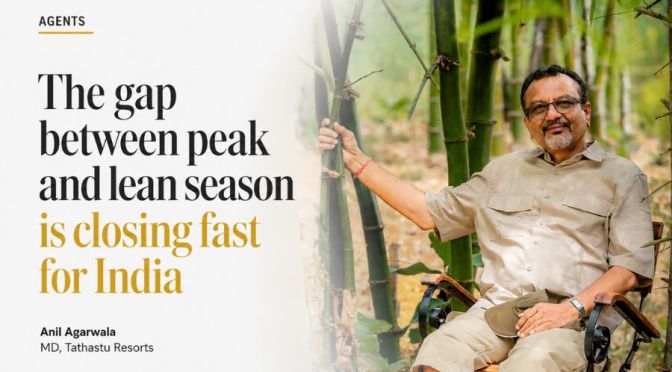
In recent years the gap between peak season and lean season is reducing quickly, says Anil Agarwala, Managing Director, Tathastu Resorts. A major factor for this, he adds, is the increase in domestic tourism. “The classic example is Goa where the rainy season was considered slack. It is no longer the case. Similar is the situation in our wildlife sector. The summer heat in Rajasthan and parts of Gujarat kept the guests away but no longer. Guests are adjusting their timings. They stay in the AC comfort of their rooms or hotels during the afternoons and plan their outdoor activities in the mornings and evenings when the weather is not that harsh,” Agarwala says. Tathastu Resorts has properties in Pench, Satpura, Tadoba, Kanha and Bandhavgarh.
Most of Tathastu’s wildlife destinations are now operational year-round. “This is more so in the case of premium properties that have multiple more options to offer to guests. Some resorts still shut operations completely from 1 July to 30 September but the big ones are open. This is because the occupancy drops to half during rains as compared to other seasons. Major shift happened when buffer safaris were permitted during monsoon since the past 4-5 years offering a unique experience. Other reasons include better roads, that offer pleasurable drives and all-weather connectivity. The increased love for nature, wildlife and solitude that make jungles an automatic choice over urban options. The rates offered during the rains that are extremely low and attractive and lastly, availability of many in-house activity options that can now keep the guests engaged,” he shares.
For his resorts, the first peak season is from 1st October till end February, for those guests who wish to have the best of the weather as well as decent sightings. The second peak season is from mid-April till mid-June when the weather is extremely hot but the sightings of all animals, especially the majestic tiger, are at a peak. He says, “People come for the almost guaranteed sightings. Mid-March to mid-April is a little lean due to exams or possibly year ending and then 1st July to 30th September used to be a lean season till 4 years ago but it is slowly catching up. A lot of corporates have started planning their off-site events during this season.”
Of course, the rates vary. During monsoons it goes down by almost 40-50% depending on the room category. In wildlife, tariffs usually vary during weekends and weekdays also. All resorts offer slightly lower rates from Monday to Thursday. “Inbound booking is very different. Almost 95% of it is through agents because the inbound traveller requires many other services too, besides just stay & food. Sometimes they also need escorts. Inbound is pre-planned and the bookings are confirmed months in advance sometimes even 12 months. You may be surprised to know that the resorts do not get good tariff in inbound bookings because of many profit keepers in-between. While booking, the inbound focus is more on the capabilities of the resort Naturalists and the experience that the resort can provide in safaris and local interactions,” Agarwala shares.

With over 17 years of experience in the B2B travel and hospitality sector, she brings deep insight into travel trade dynamics, industry challenges and market developments. She holds an MA in English Literature and a Diploma in Journalism from the Xavier Institute of Communications, Mumbai, which underpin her strong editorial expertise. An avid nature enthusiast, she prefers outdoor and adventure-led travel, including hiking and trekking.