

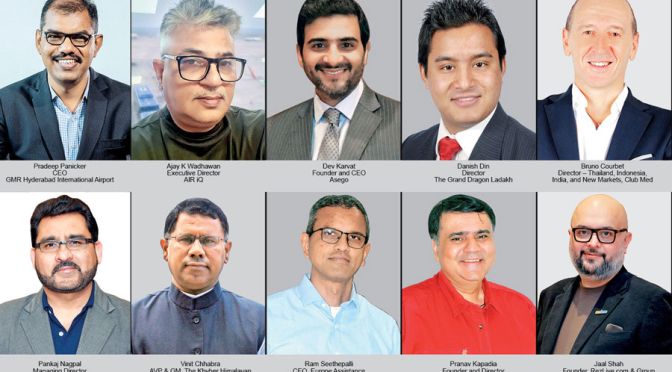
The Indian traveller has changed, and the industry can no longer operate the same old way. As expectations shift firmly towards premium, experience-led journeys, this evolution is beginning to redraw demand patterns and reshape how travel products and services are being built.
TT Bureau
India’s travel story is no longer about volumes alone — it is about a clear shift in behaviour. The modern Indian traveller is more decisive, more experience-led, and far more willing to spend on comfort and meaning. With multiple trips across the year becoming common and spends rising significantly, a growing preference for premium stays and a strong tilt towards short-haul international travel are shaping new demand patterns. What stands out is not just the frequency of travel, but the intent behind it. Ram Seethepalli, CEO, Europe Assistance India & Middle East, reinforces this shift with clear data-led insight. “Indian travel has changed fundamentally. Our customers today are younger, more confident, and far more deliberate about what they want from a trip. We are seeing 3–4 trips a year becoming normal, not just one annual holiday. Domestically, spends average 50–75k per person; internationally 1.5–3 lakh, and these numbers have risen nearly 30–40% over the last 5 years. Southeast Asia & Europe is where we see action, but due to the ongoing context it’s more towards East Asia. What this growth also means is that the challenges are real — travel inconveniences, emergencies, lack of immediate support, etc. That is where we step in.”
For Bruno Courbet, Director – Thailand, Indonesia, India, and New Markets, Club Med, the biggest shift lies in how travel fits into people’s lives. “The modern Indian traveller has moved past the ‘checklist’ phase of tourism. We are seeing a shift towards travel where the goal is deep connection rather than just sightseeing. Without a doubt, it is multi-generational travel segment. Domestic travel is booming, but for the premium segment, international travel is the primary ambition. They are spending on peace of mind. The spend has grown significantly as Indian travellers move up the value chain. On average, we have seen a 25–30 per cent increase in spend per stay over the last five years. A lot of that is driven by the ‘snow’ segment. The Indian market has embraced the luxury of the mountains with incredible enthusiasm.”
This rising demand is compelling infrastructure providers to rethink scale and experience. Pradeep
Panicker, CEO, GMR Hyderabad International Airport, highlights that airports are no longer just transit points. “We have upgraded the airport infrastructure and passenger experience through a carefully integrated blend of scale, technology, and human-centric design to meet the expectations of India’s increasingly affluent, experience-driven travellers,” he says.
In destinations, the definition of luxury is shifting towards immersion and sustainability. Danish Din, Director, The Grand Dragon Ladakh, says the change is visible in what travellers expect. “Today’s travellers, while looking for comfort and luxury, are also seeking sustainable and immersive experiences. Our focus has been on creating meaningful connections with the destination, whether through monastery visits, curated local experiences, or encouraging the use of local ingredients,” he explains,
At The Khyber Himalayan Resort & Spa in Gulmarg, the response has been to elevate both design and experience. Its Associate Vice President and General Manager, Vinit Chhabra says, “We are guided by the philosophy of creating stays that are as memorable as the destination itself. It is about immersive hospitality set amid quiet luxury, where personalised service and authentic experiences come together.” He adds, “We have reimagined the property as a contemporary mountain resort with enhanced room design, premium amenities, and new culinary offerings, ensuring the experience feels both luxurious and connected to the destination.”
On the distribution side, the shift towards high-value, customised travel is becoming increasingly evident. Pankaj Nagpal, Managing Director, Travstarz Global Group, observes, “The trend has shifted from standard inventory and itineraries to more bespoke, high-end experiences, with a strong focus on personalised wellness, multi-generational travel, and sustainable tourism.” He adds, “A majority of bookings today are influenced by high visual content and social media, and are increasingly being made on mobile devices, making travel planning more dynamic.”
Supporting this evolution, Pranav Kapadia, Founder and Director, Global Destinations, says, “The modern Indian traveller is discerning, well-informed, and increasingly driven by the pursuit of meaningful, personalised experiences rather than conventional sightseeing. This evolution is reflected in a growing preference for slower, more intentional travel from wellness-led retreats, detox, and yoga escapes, or simply choosing a resort as a space to rest, reflect, and reconnect.”
He adds, “Alongside, the rise of solo travellers and women travellers is shaping new travel narratives, with a stronger emphasis on independence, flexibility, and purpose-led journeys. On average, this traveller undertakes two to three holidays annually, balancing domestic and global travel, with outbound journeys continuing to gain momentum.”
Jaal Shah, Founder, RezLive.com and Group Managing Director, Travel Designer Group, believes enabling partners is key. “We are strengthening our premium hotel portfolio, expanding short-haul international options,” he says. “With deeper inventory and real-time availability, travel agents are better equipped to offer personalised experiences, while our focus remains on choice, convenience, and competitive margins,” he adds. Domestic travel continues to expand across regions, supported by improved connectivity. Ajay K Wadhawan, Executive Director, AIR iQ, highlights, “Passengers today give complete priority to convenience, whether it is timings, frequency, service standards, or overall comfort. This has changed how travel decisions are made. We are actively highlighting premium travel options for passengers willing to upgrade for comfort, while short-haul travel is gaining momentum among those looking for quick breaks.”
As travel becomes more complex, the need for guidance is also growing. Dev Karvat, Founder and CEO, Asego, points out, “It is not just about where people travel, but how they travel. Multi-country itineraries, adventure-led journeys, and unconventional routes are becoming more common, and each comes with its own risks. Travellers are no longer questioning the need for insurance. They are asking what kind of protection is relevant for their journey, which requires a more consultative and tailored approach.”
What emerges is a clear picture of transformation. The Indian traveller is travelling more frequently, spending significantly higher, and prioritising experiences over checklists.