

• New agreement brings together Malta’s Ministry for Foreign and European Affairs, Identità and Institute of Tourism Studies under an expanded cooperation framework
• Skills assessment services to be extended beyond tourism and hospitality to support Malta’s evolving workforce requirements
• Partnership builds on an 18-year relationship dating back to 2008, reinforcing Malta’s focus on mobility, talent development and destination competitiveness
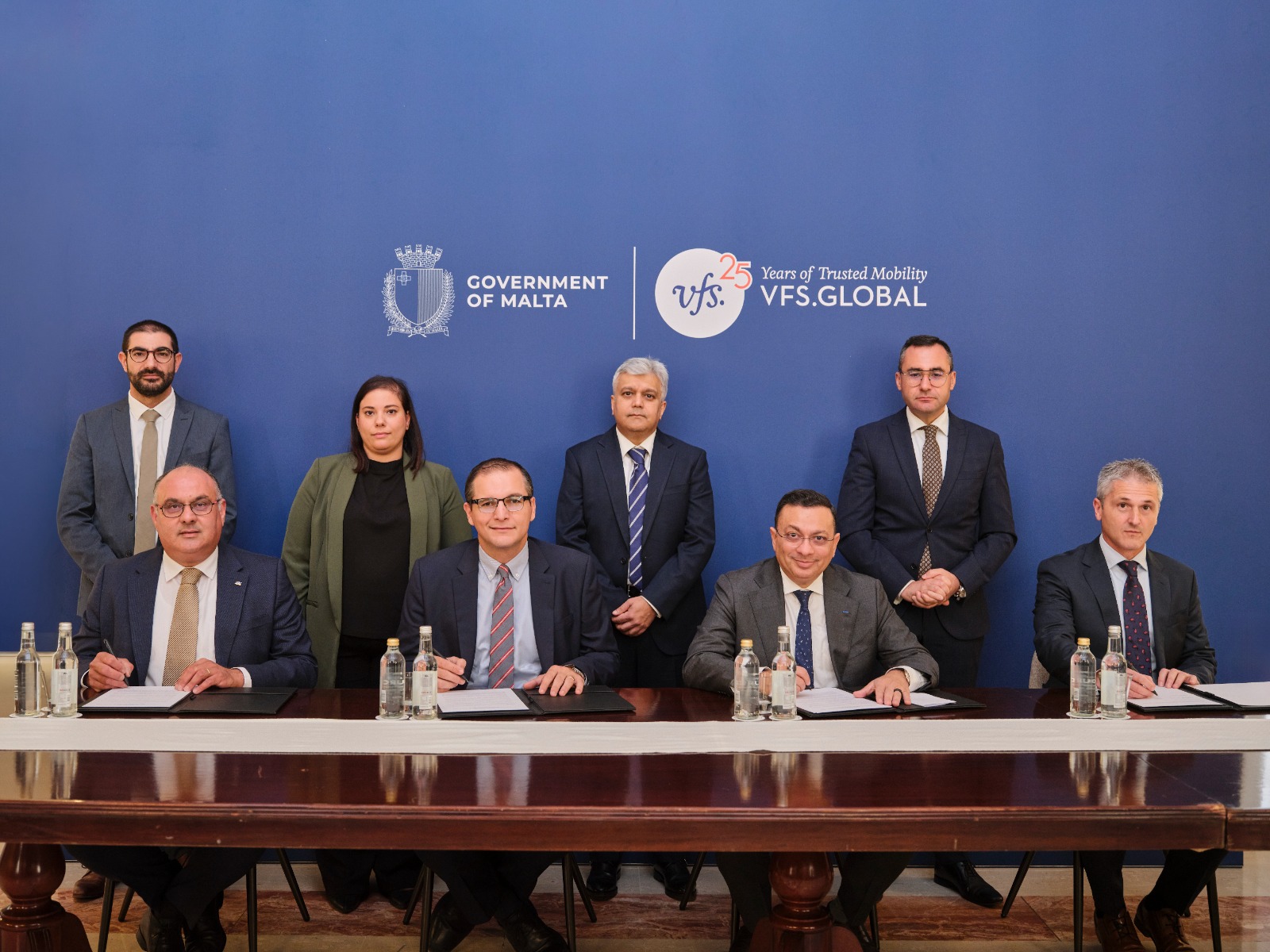
VFS Global has expanded its partnership with the Government of Malta to include skills assessment across sectors, workforce facilitation and international education initiatives, moving beyond its existing visa services engagement.
The Joint Declaration of Intent (JDI), signed on the sidelines of the World Travel & Tourism Council (WTTC) Global Summit in Malta in October, brings together the Ministry for Foreign and European Affairs (MFEA), Identità, and the Institute of Tourism Studies (ITS) under an expanded framework of cooperation.
Zubin Karkaria, Founder and Chief Executive Officer, VFS Global, said, “Our partnership with the Government of Malta has evolved significantly since it began in 2008, and this MoU marks an important new chapter in that journey. The expansion of our collaboration into citizen services for Maltese nationals overseas and skills development across strategic sectors reflects the confidence placed in VFS Global as a trusted partner. We are proud to support Malta’s ambitions to strengthen global mobility, deepen engagement with its diaspora, and build a future-ready workforce.”
The expanded agreement addresses three key areas: citizen and consular support for Maltese nationals overseas, expanded skills assessment, and initiatives to facilitate a skilled and verified workforce while positioning Malta as a destination for international education.
For the travel and hospitality industry, the development highlights the growing link between international mobility, talent availability and destination competitiveness.
Extending Skills assessment beyond Tourism
VFS Global’s existing collaboration with ITS focused on facilitating interviews for candidates in the hospitality and tourism sectors. Under the extended agreement, skills assessment services will extend to other sectors to support Malta’s evolving employment requirements.
The partnership also envisages facilitating a skilled and verified workforce across key economic sectors. While the agreement does not specify recruitment targets or additional sectors, the expanded scope places skills assessment alongside mobility services within a broader government-industry framework.
The inclusion of international education initiatives also brings educational institutions into the wider mobility and workforce development agenda. For tourism and hospitality, where sector-specific competencies are essential, stronger links between education, skills assessment and employment requirements can help align training with industry needs.
Public-Private Partnerships Shape Competitiveness
The announcement reflected discussions at WTTC’s Global Leaders Dialogue in Valletta, which brought together ministers and business leaders from 24 countries to examine the factors influencing destination competitiveness.
Held under the theme Rewriting the Rules of Global Competitiveness, the dialogue focused on connectivity, ease of travel, investment, regulation and public-private collaboration. Discussions on seamless travel examined the visitor journey across visas, border procedures, technology, hospitality and logistics, including the role of biometric systems and AI-driven visa processes.
Karkaria said, “Successful public-private partnerships are built on trust, earned through consistent delivery, transparency and accountability. Governments retain ownership of policy and decision-making, while the private sector brings investment, innovation, technology, and operational expertise at scale. Together, we can create more seamless, secure and traveller-centric journeys that supports tourism growth and economic development.”
WTTC President and CEO, Gloria Guevara, added, “Competitiveness is built through partnership. When governments and industry work hand in hand, they create the conditions for investment, innovation, connectivity and growth. Today’s dialogue demonstrated that stronger public-private collaboration is essential to securing the future of travel and tourism.”
For destinations, the discussion extends beyond facilitating visitor arrivals. Effective mobility systems, workforce readiness and investment-friendly regulatory frameworks are interconnected elements of tourism growth. Their implementation requires coordination between governments, businesses and educational institutions.
VFS Global’s role in visa processing remains administrative, covering application and document collection and biometric enrolment. Visa decisions remain the responsibility of the relevant authorities.
From Mobility to Workforce Readiness
The expanded Malta partnership illustrates how established visa facilitation relationships can develop to address wider government priorities, including skills assessment, citizen services and international education.
In the travel trade and hospitality sector, the key consideration will be how such collaborations translate into better alignment between education, skills and employment demand. The agreement sets out a framework for cooperation, with its longer-term impact dependent on implementation and the ability to address Malta’s workforce requirements.
The development reinforces a central message from WTTC Malta: destination competitiveness increasingly depends not only on attracting visitors and investment, but also on facilitating mobility and building the skills needed to sustain growth.