

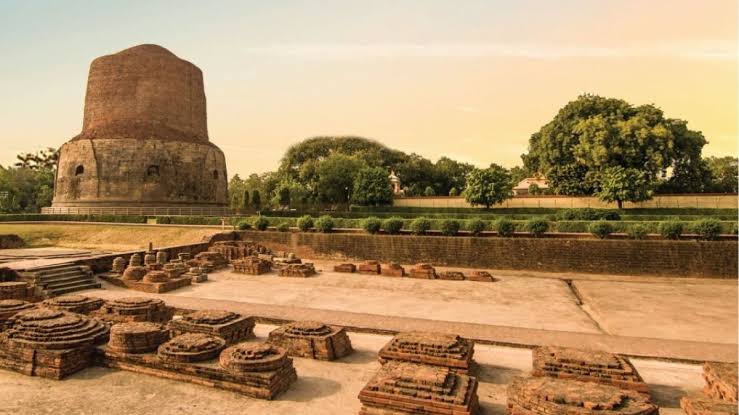
India’s Ancient Buddhist Site of Sarnath has been inscribed on the UNESCO World Heritage List during the 48th Session of the World Heritage Committee in Busan, South Korea. The recognition makes it India’s 45th World Heritage Site.
The inscribed property includes the Chaukhandi Stupa and the Archaeological Remains of Sarnath, including the Dhamekh Stupa, Dharmarajika Stupa, Mulagandhakuti Vihara and the Ashokan Pillar. The site in Varanasi is where Gautama Buddha delivered his first sermon.
Sarnath is one of Buddhism’s four principal pilgrimage destinations and preserves monuments dating from the pre-Mauryan period to the 12th century CE. The site was rediscovered in the 18th century after centuries of decline.
UNESCO recognised Sarnath under criteria (iii) and (vi) for its enduring spiritual significance and direct association with Buddha’s first sermon and the establishment of the Buddhist Sangha. The inscription followed an 18-month evaluation process.
The Archaeological Survey of India has excavated and conserved Sarnath for over 150 years, uncovering iconic artefacts including the Ashokan Lion Capital, now India’s National Emblem, and the Dharmachakra Pravartana Buddha sculpture.
The World Heritage status is expected to strengthen Buddhist tourism, enhance India’s cultural diplomacy with Buddhist nations and reinforce efforts to preserve Sarnath’s outstanding universal value through sustainable tourism and heritage conservation.