

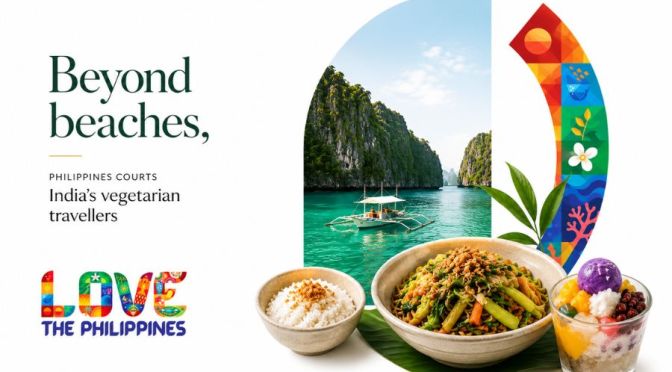
For Indian travellers, food often shapes the comfort level of an international holiday as much as the destination itself. The Philippines is increasingly recognising this shift, with vegetarian-friendly local cuisine and expanding Indian dining options quietly becoming part of its tourism appeal.
While the island nation is globally known for beaches and marine tourism, destinations such as Manila, Cebu City, Boracay, Palawan, and Clark are also emerging as relatively comfortable destinations for Indian vegetarian travellers.
 Several Filipino dishes naturally align with Indian food preferences, particularly those centred around vegetables, noodles, coconut-based preparations, and rice combinations. Pancit Canton and Pancit Bihon — Filipino stir-fried noodles — are often familiar to Indian travellers accustomed to hakka-style noodle dishes, while Vegetable Lumpia offers a local version of vegetarian spring rolls.
Other local dishes, such as Adobong Kangkong, made with sautéed water spinach, and Pinakbet, a mixed vegetable stew, resemble flavour profiles familiar to Indian households. Laing, prepared using taro leaves and coconut milk, also reflects similarities with coconut-based curries common across South India.
Garlic rice served alongside vegetables remains a widely available staple, while Halo-Halo, the country’s signature dessert combining shaved ice, fruits, beans, and milk, continues to be a popular culinary experience among visitors.
Indian food presence expands across tourism centres
 Alongside local cuisine, Indian restaurants are now widely available across major tourism and urban centres including Manila, Cebu, Clark, Boracay, and El Nido. This growing accessibility is helping address one of the most common concerns among Indian outbound travellers — availability of familiar food options during international holidays.
The increasing visibility of Indian cuisine within the Philippines also reflects the destination’s broader effort to become more adaptable to evolving Indian travel preferences, particularly among families and vegetarian travellers.
Food becoming a tourism differentiator
As outbound travel patterns shift, destinations are increasingly recognising that culinary accessibility can influence travel decisions just as strongly as connectivity or attractions.
For the Philippines, positioning itself as both an experiential island destination and a food-comfort-friendly market for Indians may help widen its appeal beyond adventure and beach tourism, particularly among first-time international travellers and family segments seeking familiarity alongside exploration.

Rahul Bhadana is a digital editor at TravTalk with experience spanning multiple content niches, with a strong focus on travel trade journalism and digital publishing. A graduate of Delhi University, his work covers editorial writing, content strategy and platform-led storytelling, supporting TravTalk’s digital growth and industry engagement. A technology enthusiast, he enjoys films, poetry and exploring new ideas across media and culture.