
As policymakers and industry leaders prepare to meet at the FAITH Tourism Conclave 2026, the federation outlines an ambitious reform agenda. Coordinated policy action will be key to unlocking India’s tourism economy and positioning the country among the world’s leading destinations, it says.
Janice Alyosius
With India positioning tourism as a key pillar of economic growth, the Federation of Associations in Indian Tourism & Hospitality (FAITH) has sharpened its policy agenda, urging the government to move beyond announcements and accelerate structural reforms. As the industry eyes a significant increase in foreign tourist arrivals over the next five years, stakeholders believe that sustained marketing, easier travel access, and stronger collaboration between the Centre and states will determine whether India can compete with leading global destinations. The discussions at the FAITH Conclave, themed ‘Incredible India: Invaluable Economics’, come as tourism assumes greater significance in India’s economic agenda. The conclave will bring together Union Tourism Minister Gajendra Singh Shekhawat, Jammu & Kashmir Chief Minister Omar Abdullah, WTTC CEO Gloria Guevara, industry leaders, and global experts to deliberate on unlocking India’s tourism economy. The two-day agenda spans inbound tourism strategy, aviation-led growth, India’s global MICE positioning, hospitality competitiveness, domestic tourism, frontier tourism, peace through tourism, and building a seamless tourism ecosystem — reflecting FAITH’s broader push to position tourism as a key economic driver rather than merely a service sector.
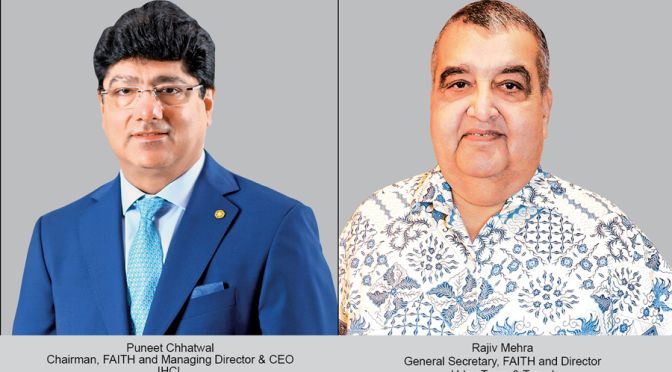
Puneet Chhatwal, Chairman, FAITH and Managing Director & CEO, IHCL, said the organisation has made progress in aligning the fragmented tourism ecosystem under a common national agenda while continuing to advocate for policy reforms. “Since the last FAITH Convention, I would look at our progress at three levels — alignment, advocacy, and action. FAITH represents hotels, restaurants, tour operators, travel agents, transporters, convention operators, heritage hotels, adventure tourism, and domestic tourism under one platform. The Union Budget has recognised tourism as a sector for employment-led growth. While there has been movement on destination development, infrastructure, skilling, and medical tourism, larger structural reforms such as competitive GST, export status for tourism earnings, single-window clearances, and industry status across all states remain priorities,” he said. Echoing the need for policy execution, Rajiv Mehra, General Secretary, FAITH and Director, Uday Tours & Travel, said India has reached a defining moment in its tourism journey but requires targeted interventions to improve global competitiveness. “Three policy interventions deserve immediate attention — liberalised visa reforms with seamless entry processes, a coordinated national strategy for destination development and infrastructure readiness, and granting tourism full industry status with structured fiscal and regulatory support. While there is growing recognition of tourism as a major economic and employment driver, the pace of implementation, stronger inter-ministerial coordination, and better Centre-state alignment will ultimately determine how quickly these reforms translate into measurable outcomes,” Mehra said.
He acknowledged that initiatives such as expanded e-visas, airport development, and investments in religious and heritage tourism have yielded positive results but maintained that execution gaps continue to hold back the sector. “The challenge is no longer policy announcements but implementation at scale. Last-mile connectivity, destination readiness, infra quality, skill development, and ease of doing business still need significant improvement,” he added.