

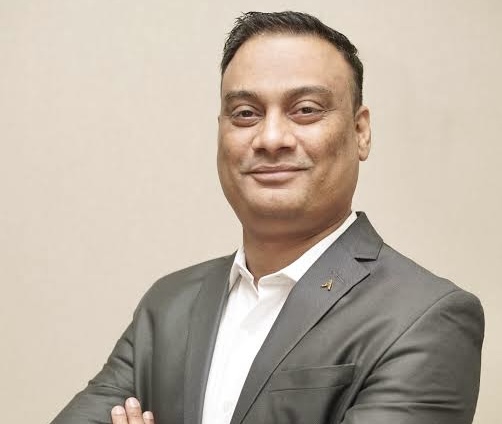
As BKC continues to strengthen its position as a key business and hospitality hub in Mumbai, hotels are balancing strong corporate demand with opportunities across MICE, events and leisure. At ibis Mumbai BKC, General Manager, Sandip Satange is focused on driving occupancy, ADR and profitability while strengthening guest experience and operational efficiency. With over 14 years of experience across India, the UK and the US, Satange shares his outlook on Mumbai’s evolving demand landscape, the hotel’s growth strategy and the priorities shaping its next phase.
With over 14 years of experience across India, the UK and the US, what key learnings do you bring to your role at ibis Mumbai BKC?
I started my career in F&B, and that really shaped the way I look at hospitality. Working across India, the UK and the US also showed me that while hospitality is universal, guest expectations can be quite different. A guest in London, Chennai or Mumbai wants to feel looked after, but how you deliver that service makes the difference.
I have also led hotels through some very difficult periods, including the pandemic. One thing that has stayed with me is that you have to invest in your people. If the team is strong, the hotel performs better. I also believe in staying close to the operation. I like to walk around the hotel, speak to guests and hear from the team. That is something I continue to do at ibis Mumbai BKC.
Given BKC’s strong business ecosystem, where do you see the key demand opportunities for the hotel across corporate, MICE and leisure segments?
Corporate remains a key part of our business, given our location in BKC. The area has many financial institutions, consulting firms, and global companies, so there is a steady flow of business travellers. BKC also works well for guests who need better access to the airport and different parts of Mumbai.
For MICE, we see opportunities in meetings, offsites, training and smaller groups looking for convenience and value. On the leisure side, we are seeing demand from families, people coming in for concerts and events, and guests choosing Mumbai for short breaks. So, there is a good mix available to us. The focus is on making sure we are relevant to each of these segments and deliver consistently.
In Mumbai’s competitive market, what are your key priorities for driving occupancy, ADR and overall profitability?
For me, occupancy and ADR cannot be looked at in isolation. The objective is to get the right business at the right price while maintaining a strong guest proposition. We look closely at demand patterns, market movement, booking windows, segment performance and major events in the city. This allows us to make informed decisions on pricing and inventory rather than relying on established patterns.
The other important part is cost and operational discipline. Revenue growth has to translate into healthy profitability. This means improving productivity, controlling unnecessary costs, strengthening direct business and ensuring that every department is aligned with the commercial priorities of the hotel.
Ultimately, sustainable performance comes from balancing revenue, cost, guest satisfaction and team productivity rather than focusing on one metric.
What are your priorities for strengthening guest experience, team engagement and operational efficiency at the hotel?
My approach is quite simple. A good guest experience starts with a good employee experience. If our team is engaged, confident and clear about what is expected, they are better equipped to take care of guests. We focus on being present on the floor, listening to guest feedback and giving our teams the ability to resolve issues quickly. Small operational details can have a big impact on how a guest remembers a stay, so consistency is important.
From an efficiency perspective, we continue to look at processes that can be simplified, technology that can support the team and areas where we can reduce duplication or unnecessary effort. At the same time, efficiency should never come at the cost of hospitality. Having operated hotels through challenging periods, I have learned that teams perform best when communication is open and people feel that their contribution matters. That is something I continue to focus on at ibis Mumbai BKC.
What is your vision for ibis Mumbai BKC, and which areas are you focusing on to drive business growth?
The focus is to build ibis Mumbai BKC into a strong and consistent hotel in the market. We want to strengthen our corporate relationships, build our MICE business and make the most of the demand coming into BKC and Mumbai.
At the same time, we are looking closely at repeat business, guest feedback and team development. We also want to build stronger relationships with our local business partners and better understand the needs of different guest segments. For me, growth is not only about increasing numbers. It is also about building a team and an operation that can sustain that growth.